
Itchy, red, watery eyes have a direct fix: allergy eye drops that block histamine right where the reaction starts. Close to 40% of Americans report ocular allergy symptoms each year, according to EyeWiki data, yet most people grab the wrong bottle first. This guide sorts out which formula stops the itch fastest, which one only soothes dryness, and when symptoms call for a doctor instead of another drugstore trip.
Types of Eye Drops for Eye Allergies
Not every drop treats the same problem, so matching the formula to the symptom matters more than brand loyalty. Eye allergy medicine generally falls into four categories, each working through a distinct mechanism inside the eye.
- Antihistamines block histamine receptors directly, easing itching and redness within minutes.
- Mast cell stabilizers prevent histamine release before a reaction even starts, working best when used ahead of exposure.
- Decongestants shrink blood vessels to reduce visible redness but don’t treat the underlying allergic response.
- Artificial tears dilute and rinse allergens off the surface, offering comfort without any drug action at all.
Many modern formulas combine an antihistamine with a mast cell stabilizer in a single bottle, giving both immediate and lasting coverage. Picking the correct category first prevents wasted purchases and speeds up relief during peak pollen weeks. According to a 2011 epidemiology review, allergic conjunctivitis prevalence has climbed as high as 40% in recent population studies, underscoring how common this search for relief has become.
OTC vs. Prescription Eye Drops

The over-the-counter shift for eye allergy treatment has changed significantly in recent years. Alcon secured FDA approval to move olopatadine, once available only by prescription, to standard pharmacy shelves, giving an estimated 66 million allergy sufferers direct access to stronger relief. That switch matters, since prescription-strength ingredients now sit alongside basic lubricants in the same aisle.
| Factor | OTC Eye Drops | Prescription Eye Drops |
| Access | Available without a doctor visit | Requires an eye exam |
| Strength | Standard antihistamine doses | Often higher concentrations |
| Common uses | Mild to moderate seasonal symptoms | Chronic or severe allergic conjunctivitis |
| Examples | Pataday, Alaway, Zaditor | Lastacaft, Pazeo, Bepreve |
Most seasonal sufferers do well with over-the-counter allergy eye drops purchased directly off the shelf. Persistent redness, swelling, or discomfort lasting beyond two weeks usually signals a need for prescription-strength treatment or a specialist evaluation instead of another OTC swap.
Pataday vs. Alaway: How the Two Compare
Pataday and Alaway dominate the antihistamine eye drops category, but their formulas work differently enough to affect both symptom relief and daily convenience.
Pataday eye drops contain olopatadine hydrochloride, an ingredient that blocks histamine and stabilizes mast cells at once. Pataday Once Daily Relief delivers up to 24 hours of protection from a single application, while Pataday Twice Daily Relief covers roughly 16 hours per dose.
Alaway antihistamine eye drops rely on ketotifen fumarate instead, a combination antihistamine and mast cell stabilizer that needs reapplication every 8 to 12 hours, up to twice a day. Alaway carries approval for children as young as 3, while Pataday’s approval extends down to age 2.
Quick Comparison
| Feature | Pataday | Alaway |
| Active ingredient | Olopatadine hydrochloride | Ketotifen fumarate |
| Dosing frequency | Once or twice daily | Twice daily |
| Duration of relief | 16–24 hours | Up to 12 hours |
| Minimum age | 2 years | 3 years |
Neither brand outperforms the other universally. The right pick often comes down to dosing convenience, price point, and how a person’s eyes respond to each active ingredient over a full season.
Artificial Tears vs. Antihistamine Eye Drops
Confusing lubricating drops with medicated ones is a common mistake that delays real relief for allergy sufferers. Artificial tears rinse allergens and irritants off the eye’s surface, offering comfort without addressing the histamine response driving the itch underneath. They work well for mild dryness or as a quick rinse after exposure to pollen or pet dander, and they carry virtually no side effects.
Antihistamine formulas, by contrast, interrupt the biological allergic reaction directly at the receptor level. For persistent itching, redness, or swelling, a dedicated eye allergy medicine will consistently outperform basic lubrication alone. Combining both approaches often works best in practice: artificial tears first to flush allergens, followed by a medicated drop for lasting symptom control through the rest of the day.
How to Use Allergy Eye Drops Correctly
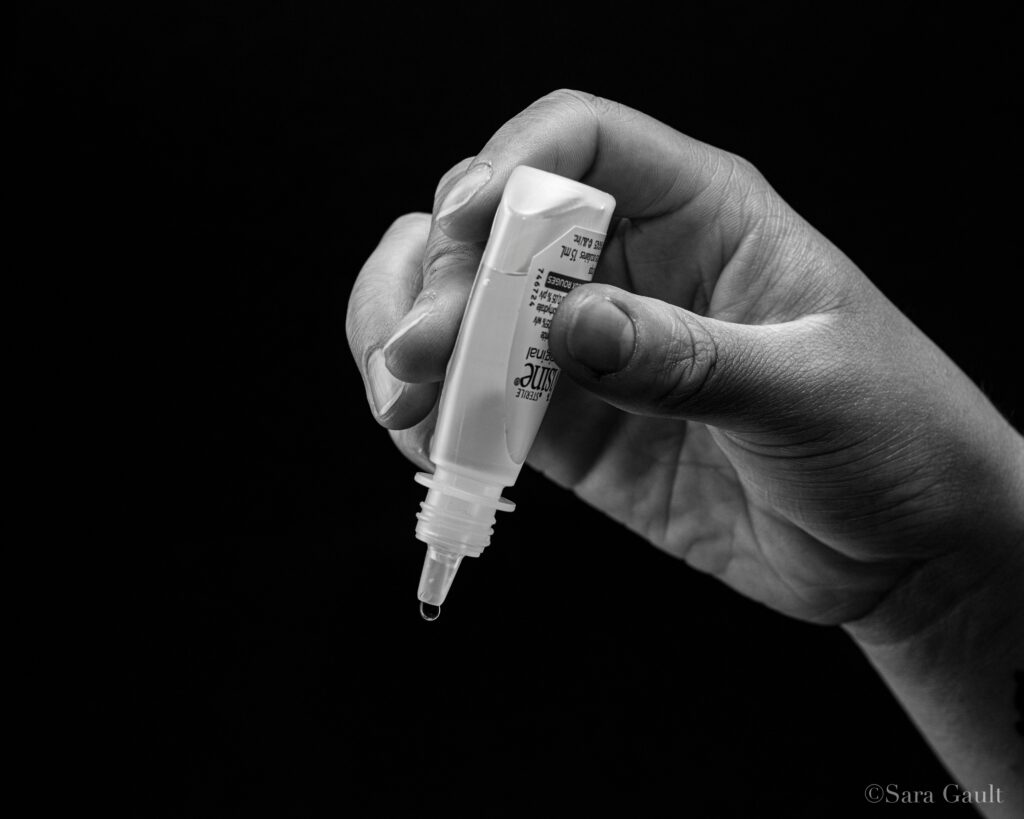
Proper technique affects how well any eye drop performs, regardless of brand or active ingredient inside the bottle.
- Wash hands thoroughly before touching the bottle or the eye area.
- Tilt the head back and pull the lower eyelid down gently to form a small pocket.
- Hold the dropper close without letting the tip touch the eye or eyelashes.
- Release one drop into the pocket, then close the eye gently for about 30 seconds.
- Press a finger lightly against the inner corner of the eye to limit drainage.
- Wait at least five minutes before applying a second medication, if one is needed.
- Replace contact lenses only 10 to 15 minutes after most antihistamine formulas, unless the label states otherwise.
Following the labeled dosing schedule prevents rebound redness and keeps even the best eye drops for allergies working as intended across a full allergy season.
When to See a Doctor
Most seasonal eye allergy symptoms respond well to at-home treatment within a few days of starting a routine. Certain warning signs, however, call for professional evaluation rather than continued self-treatment at the pharmacy.
- Symptoms that persist beyond two weeks despite consistent, correct use
- Severe pain, light sensitivity, or sudden vision changes
- Thick discharge that suggests infection rather than allergy
- Swelling that spreads noticeably beyond the eyelid itself
- No improvement at all after switching to a different formula
An eye doctor can rule out infections, prescribe stronger anti-inflammatory options, or identify a specific trigger through targeted allergy testing. Ignoring symptoms that persist risks corneal irritation and longer-term discomfort that basic drops alone cannot resolve.
Bottom Line
Matching the right treatment to the symptom, whether that means a fast-acting antihistamine, a preventive mast cell stabilizer, or simple artificial tears, makes seasonal discomfort far more manageable to live with. When over-the-counter options stop working, a prompt doctor visit ensures the right diagnosis and a treatment plan built around the actual cause.
Frequently Asked Questions
What is the strongest OTC allergy eye drop available today?
Pataday Once Daily Relief, built on a 0.2% concentration of its active ingredient, offers prescription-strength dosing and up to 24 hours of itch relief, making it one of the strongest options sold without a prescription.
Can allergy eye drops be used every single day?
Yes, most antihistamine and mast cell stabilizer combinations are labeled safe for daily use throughout allergy season. Decongestant-only drops, however, should be limited to a few days to avoid rebound redness.
Is Alaway the same medication as Pataday?
No. Alaway uses ketotifen fumarate, while Pataday relies on a different active ingredient entirely. Both treat allergic itching effectively, but they differ in dosing frequency, duration of relief, and the minimum approved age for use.
Do artificial tears actually help with eye allergies?
Artificial tears rinse allergens from the eye’s surface and ease dryness, but they don’t block histamine directly. Pairing them with a dedicated antihistamine drop typically provides more complete relief overall.
How fast do allergy relief eye drops start working?
Most formulas, including Pataday and Alaway, begin relieving itching within 3 to 5 minutes of application, with effects lasting several hours depending on the specific active ingredient used.